
In the latest development regarding Housing flashing warning, Housing is flashing warning signs just as the Fed weighs more interest rate hikes Skip Navigation Markets Pre-Markets U.S. Markets Europe Markets China Markets Asia Markets World Markets Currencies Prediction Markets Cryptocurrency Futures & Commodities Bonds Funds & ETFs Business Economy Finance Health & Science Media Real Estate Energy Climate Transportation Investigations Industrials Retail Wealth Sports Life Small Business Investing Personal Finance Fintech Financial Advisors Options Action ETF Street Buffett Archive Earnings Trader Talk Tech Cybersecurity AIEnterprise Internet Media Mobile Social Media CNBC Disruptor 50Tech Guide Politics & Policy White House Policy Defense Congress Expanding Opportunity Europe Politics China Politics Asia Politics World Politics Video Latest Video Full Episodes Livestream Top Video Live Audio Europe TVAsia TVCNBC Podcasts CEO Interviews Digital Originals Watchlist Investing Club Trust Portfolio Analysis Trade Alerts Meeting Videos Homestretch Jim's Columns Education Subscribe PROPro News Josh Brown Mike Santoli Calls of the Day My Portfolio Livestream Full Episodes Stock Screener Market Forecast Options Investing Chart Investing Subscribe Livestream Menu Make Itselect USAINTLLivestream Search quotes, news & videos Livestream Watchlist SIGN INCreate free account Markets Business Investing Tech Politics & Policy Video Watchlist Investing Club PROLivestream Menu Economy Housing is flashing warning signs just as the Fed weighs more interest rate hikes Published Tue, Oct 20 20261:50 PM EDTUpdated Wed, Oct 21 20267:20 AM EDTJeff Cox@jeff.cox.7528@Jeff Cox CNBCcom WATCH LIVEKey Points Fresh data points from September showed the housing market continues to deteriorate just as the Federal Reserve is considering raising interest rates again.Building permits, new starts and pending sales all were considerably worse than Wall Street forecasts.Under some circumstances, Fed officials would use easier policy to spur demand.
Key Takeaways & Highlights
- Housing is flashing warning signs just as the Fed weighs more interest rate hikes Skip Navigation Markets Pre-Markets U.S.
- The index slid 7.3% for the month and was off 11.3% from a year ago.
- Lower rates generally help spur demand by lowering borrowing costs.
Key Background and Context
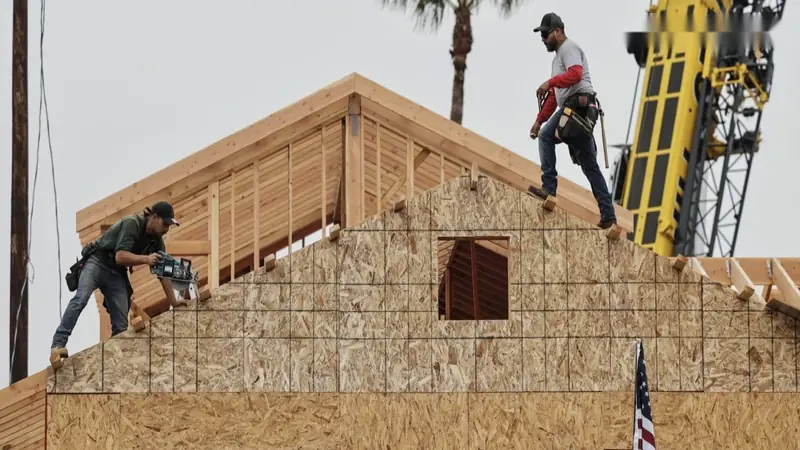
However, the central bank is currently battling inflation, which it could prioritize over a flagging housing picture.Workers install roofing for a new home under construction in Palm Beach Gardens, Florida, June 29, 2026.Zak Bennett | Bloomberg | The Federal Reserve's inflation fight is running into a growing complication: The housing market is slumping even as broader price pressures persist.Housing data deteriorated further in September, according to separate reports Tuesday, adding to an already complicated policy landscape for the central bank as it contemplates its next move on interest rates.Things appear poised to get worse before they get better.

If the Fed raises short-term rates as expected over the next several months, mortgage rates that are already at 7.43% could push even higher, putting a further damper on affordability. Higher home borrowing costs have coincided with a general rise in inflation and a housing shortage."The housing market is about to go into a deep sleep unless Washington can do a 180 on its policies and make the cost of a new home more affordable," wrote Chris Rupkey, chief economist at Fwdbonds.

Latest Developments and Impact Analysis
"It is not winter yet but housing is going into a deep freeze."The National Association of Realtors reported that pending sales, a forward-looking index that measures home sales under agreement but not completed, hit an all-time low in records that stretch back to 2001. The index slid 7.3% for the month and was off 11.3% from a year ago.
The Wall Street estimate was for a decline of just 0.4%.Housing starts, another important metric when evaluating the state of the market, also posted a decline well outside already-muted expectations Tuesday. watch now VIDEO1:0801:08Pending home sales drop 7.3% in September, missing estimates Squawk on the Street Privately owned housing starts fell 5.2% on the month, against expectations for a decline of just 0.4%, while building permits were off 0.2%, against the Dow Jones consensus outlook for a 2% gain, according to Commerce Department data.Moreover, single-family permits totaled just 845,000, down 4% from August and the lowest number since 2023."Market conditions weakened in September due to fast-rising mortgage rates," said Lawrence Yun, the NAR's chief economist.
"Although job growth and income gains can support home purchases, housing affordability is more affected by changes in mortgage rates."Rising rates weigh on outlook The rate for a 30-year mortgage was above 7% for most of September, ending the month around 7.6%, according to Mortgage News Daily.
Five years ago, rates were closer to 3%, feeding into the Covid-era housing boom that saw an explosion in demand and, consequently, prices.Outside of the pending sales number, home builder sentiment is at lows not seen in 14 years.Under some conditions, Fed officials might respond to the housing weakness with easier monetary policy.
Lower rates generally help spur demand by lowering borrowing costs. But the Fed has a bigger fight on its hands in its effort to bring inflation under control. Readings last week on consumer and producer prices provided few signs of optimism, with wholesale final demand goods prices rising 2.6%, the fastest pace in a Bureau of Labor Statistics data series going back to December 2009.Fed officials have said they are tracking the inflationary effects of the robust investment in artificial intelligence, which is driving up the cost of chips and electronics.
At the same time, they believe that benefits from AI investment could offset weaker sectors of the economy such as housing.However, conditions generally point to a housing market likely to weaken further before stabilizing, Goldman Sachs economist Ronnie Walker said in a client note Monday."In 2027, we expect the headwind from affordability—reignited by the recent rebound in mortgage rates—to increasingly dominate, weighing further on activity," Walker wrote.
"Sustained higher mortgage rates will continue to have their most pronounced impact on housing turnover, and the recent run-up in rates is likely to push existing home sales lower in the coming months."More of the same Several data points tell the story: More than 95% of mortgage borrowers have rates below the prevailing level, and 65% are 2 percentage points below.
Goldman forecasts residential investment to decline 2.5%, 4% and 1%, respectively, over the coming three quarters, with a possibility for a steeper decline if mortgage rates don't fall.The firm sees single-family starts of just 875,000 in 2027, little changed from this year, while existing sales are forecast at 3.9 million, also about the same as 2026 but notably 26% below pre-Covid 2019 levels.
Walker attributed the middling levels as a product of the "lock-in" effect in which it's too expensive for current homeowners to move and take on higher borrowing costs while deteriorating affordability weighs on new construction."Housing activity has remained rangebound in recent years, capped on the upside by affordability headwinds and buffered on the downside by the longstanding housing shortage," Walker wrote.
"In 2027, we expect the headwind from affordability to increasingly dominate, weighing further on activity."Markets expect the Fed to hold benchmark rates steady when it meets next week. However, futures pricing implies a strong chance of a quarter-point hike in December and another in March 2027, according to the CME Group's Fed Watch tool.One point of optimism comes from Yun, the NAR economist, who thinks the trend of mortgage costs running ahead of Fed hikes could mean that rates are topping out."Given that mortgage rates have already risen much more than the Federal Reserve's short-term interest rate hikes, mortgage rates could be topping out," he said.
"Buyers and sellers may simply be holding back until mortgage rates move favorably."watch now VIDEO3:0903:09September housing starts miss estimates Squawk Box Choose CNBC as your preferred source on Google and never miss a moment from the most trusted name in business news.




Comments 0
Leave a Comment
No comments yet. Be the first to share your thoughts!